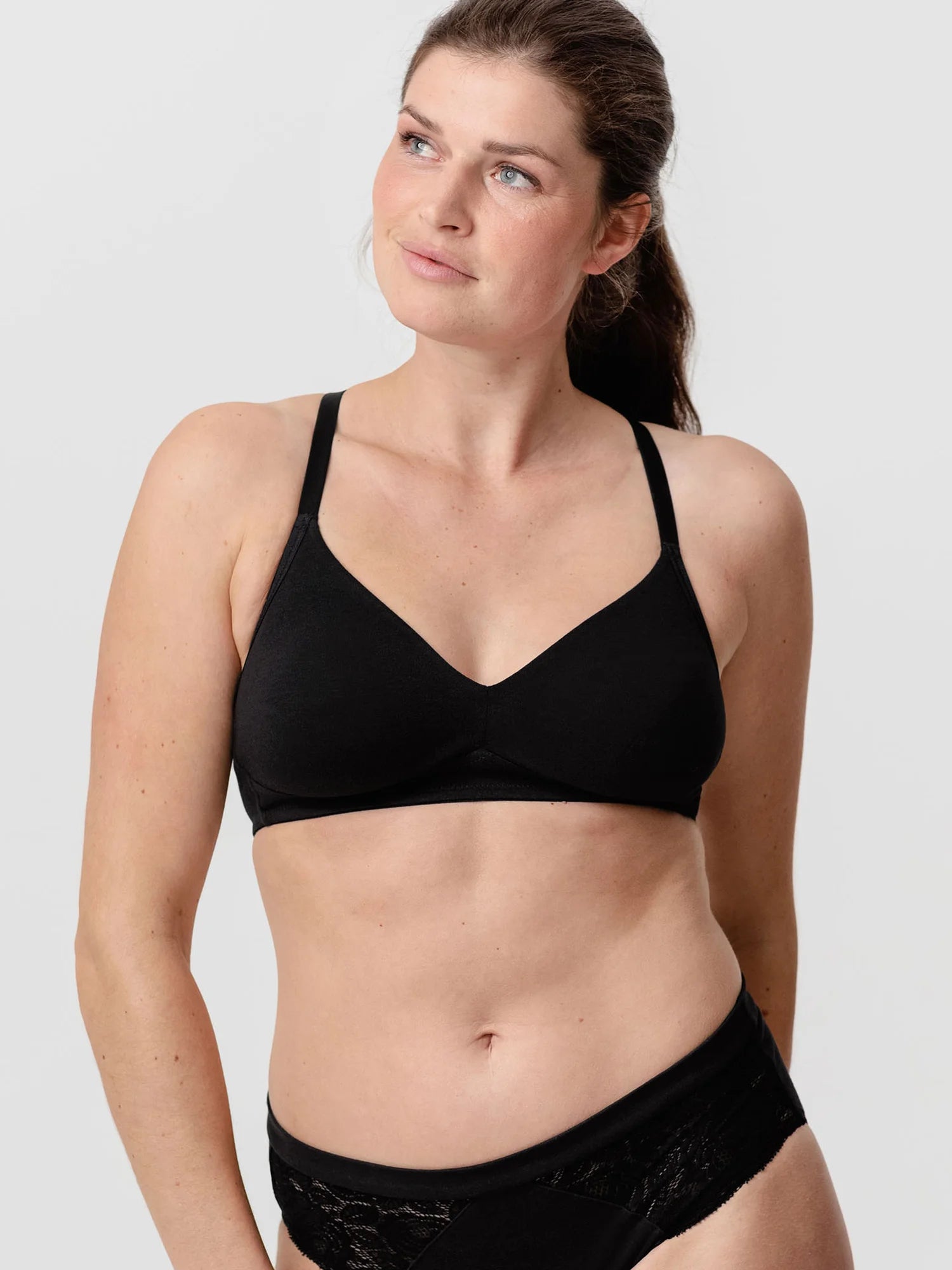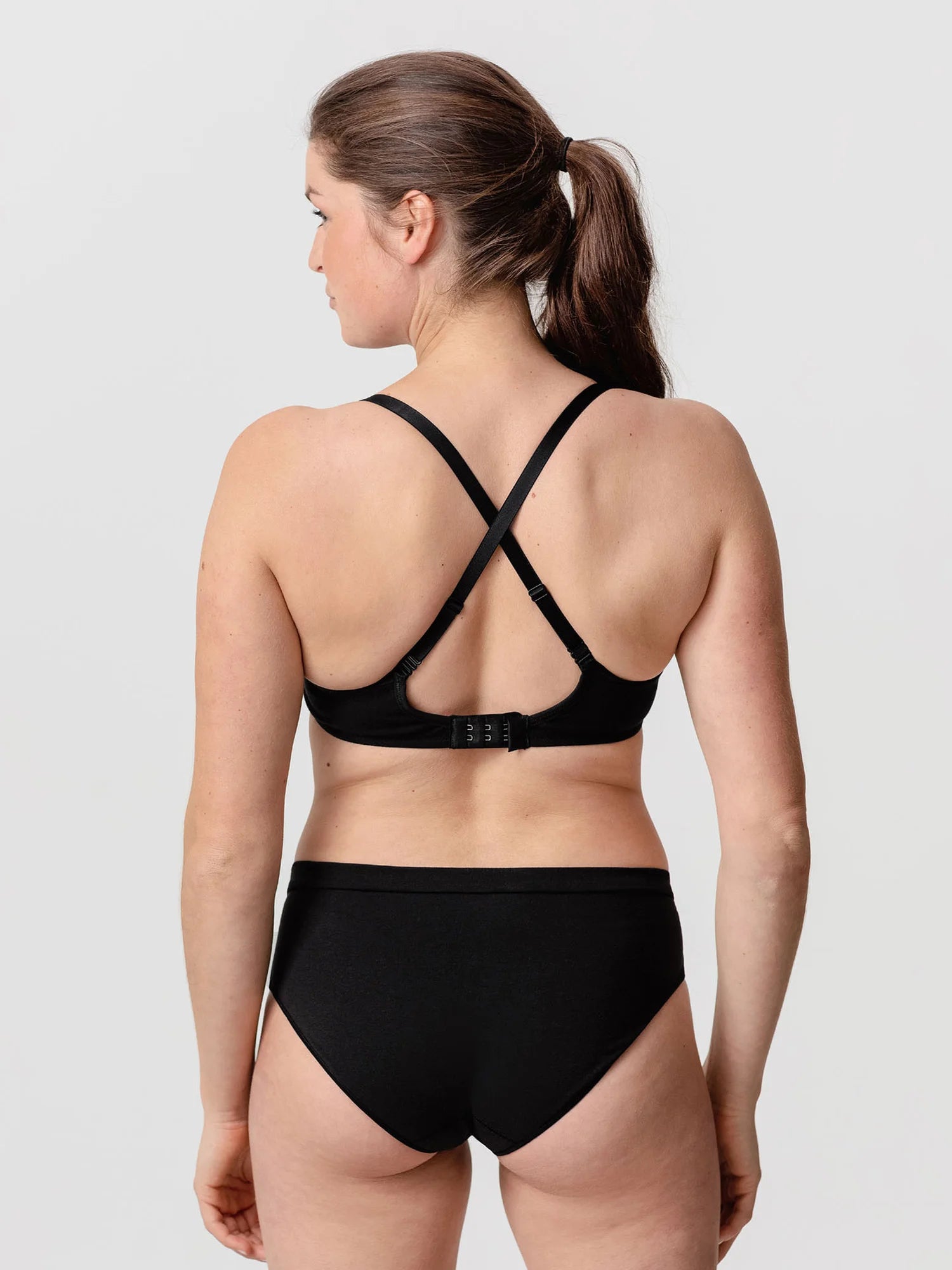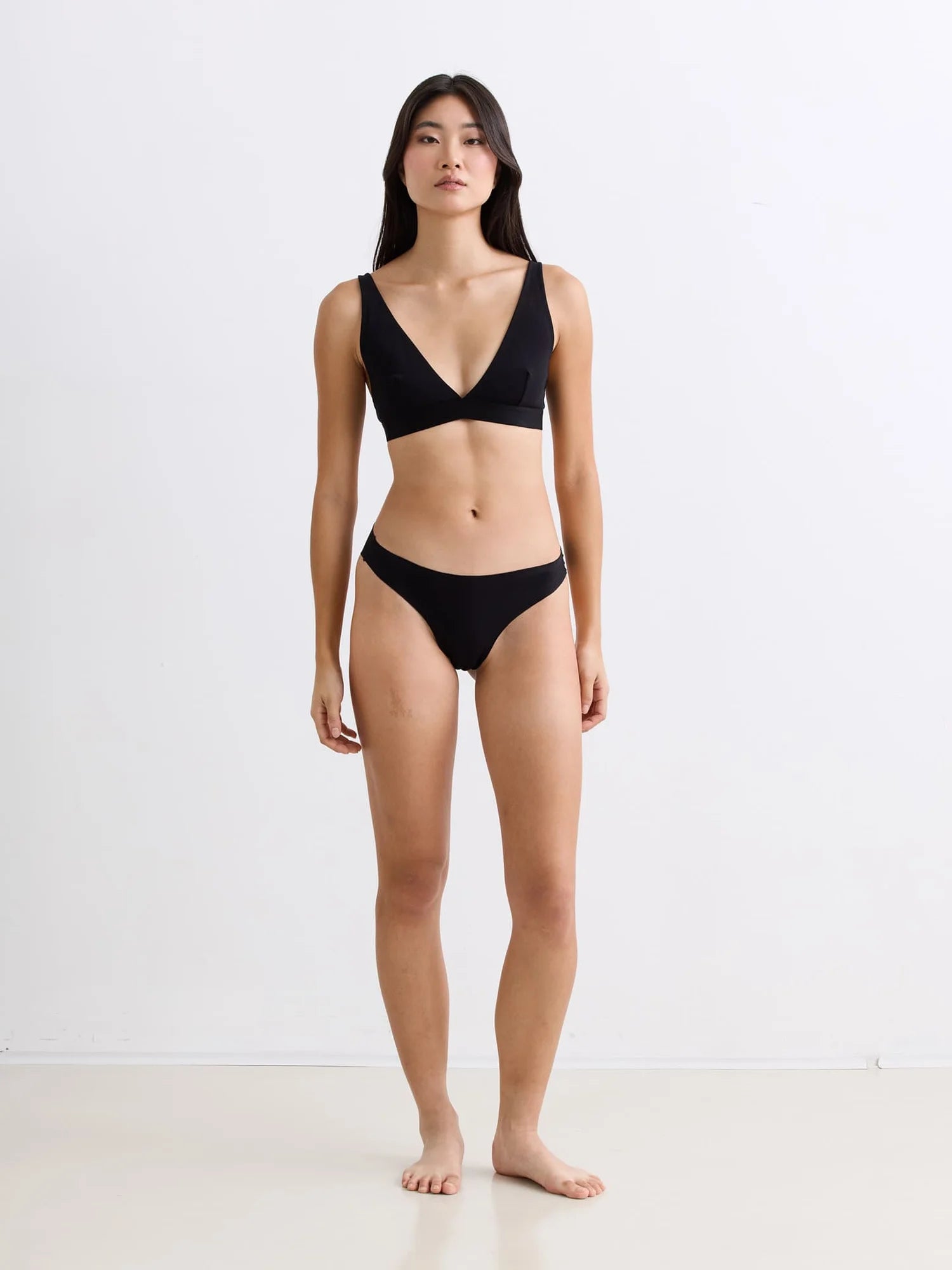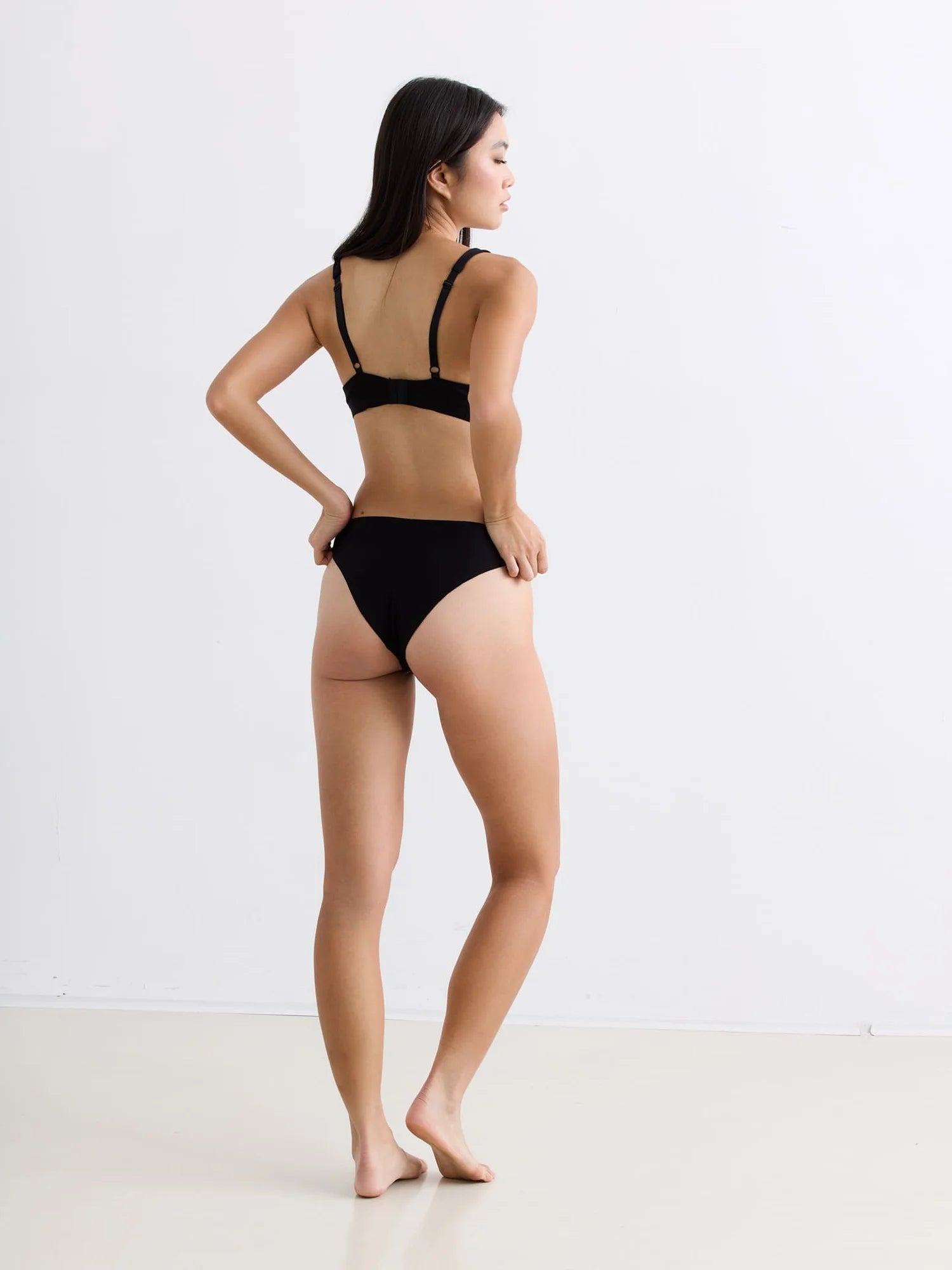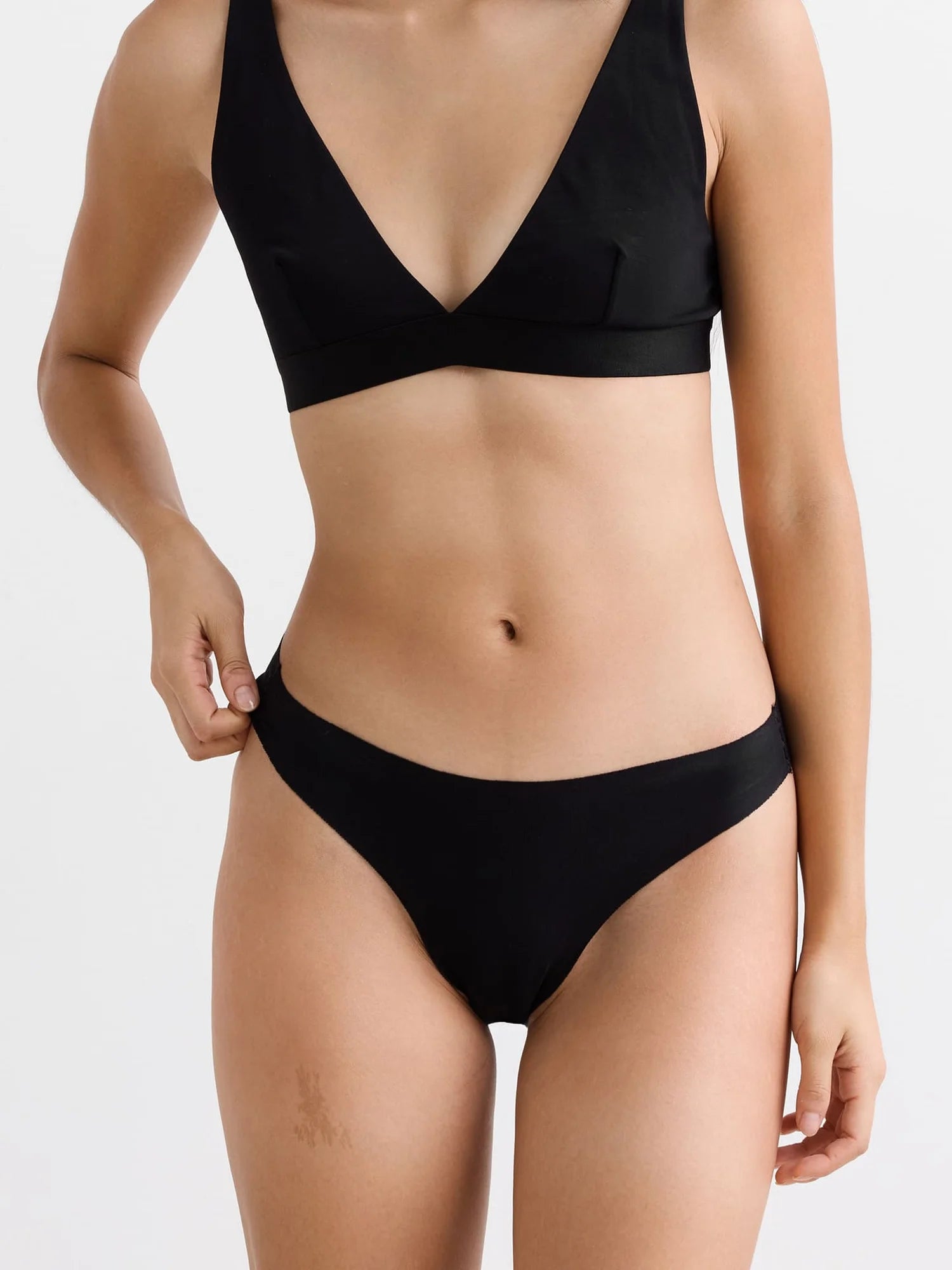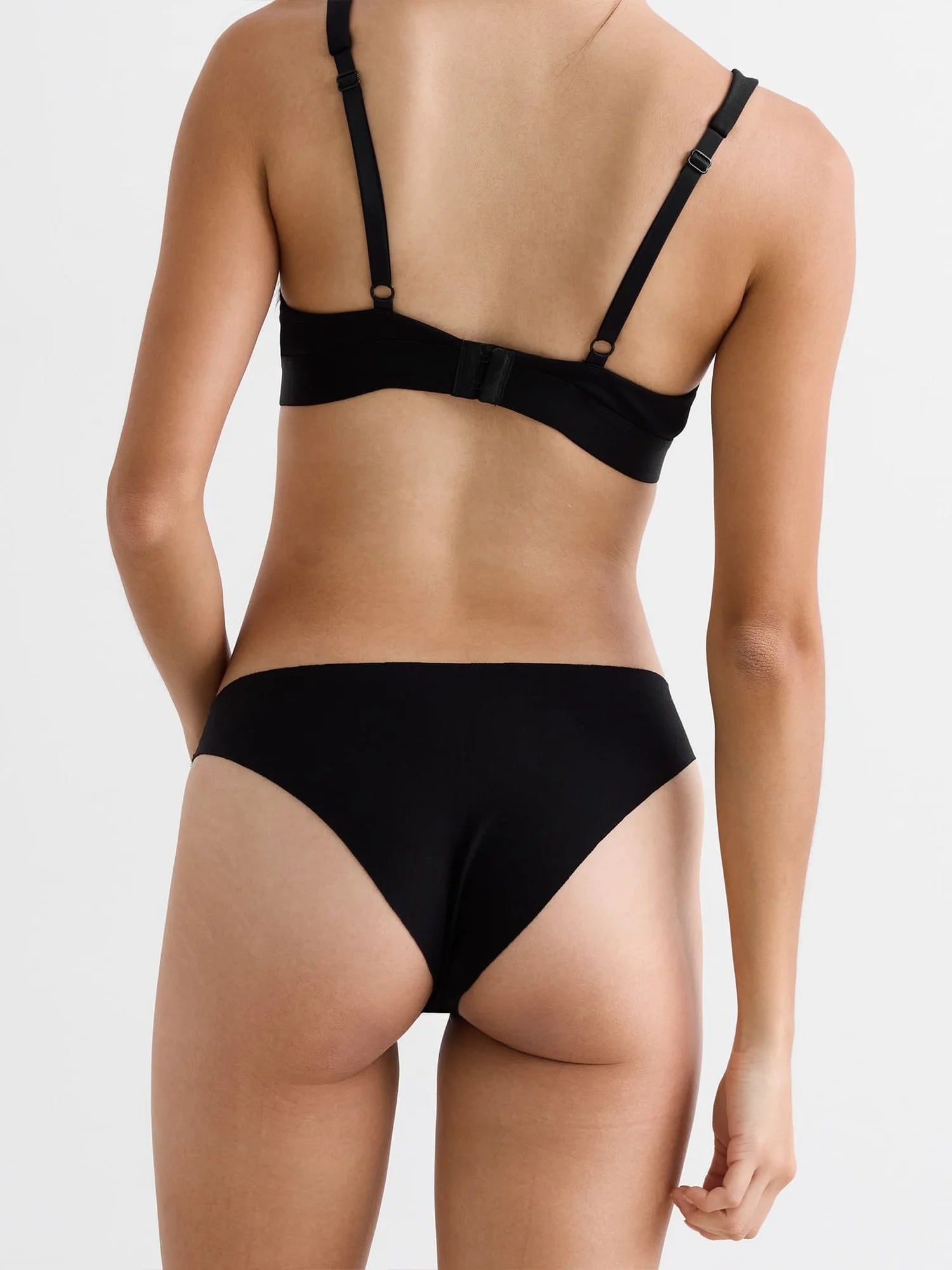



Cup size does not describe how big your breasts are. It describes how much volume they have in relation to your underbust measurement. That is why the question "is 75C big" cannot be answered with yes or no, and why the same letter fits two women completely differently. Here is what the letter actually tells you, how to work it out and what 75B, 80C or 85E really mean.
What is cup size?
A bra size always consists of two parts, and they belong together. The number stands for your underbust measurement in centimetres, so 70, 75, 80, 85, 90 or 95. The letter stands for the cup. It describes the difference between your bust measurement and your underbust measurement.
The most important point first: the letter is a ratio, not an absolute size. A C on an underbust of 70 holds noticeably less volume than a C on an underbust of 90. Both are called C, both are different sizes.
This is the most common misconception about bra sizes. It is also the reason so many women spend years in the wrong size: they remember the letter and ignore the number.
How is cup size calculated?
You need two measurements and one subtraction.
- Underbust. Place the tape directly under your bust, run it horizontally around your body, snug but not constricting.
- Bust. Place the tape at the fullest point of your bust, horizontally, resting lightly, without compressing the breast.
- Take the difference. Bust minus underbust. The result in centimetres gives you the letter.
Roughly every two centimetres of difference moves you one letter up. Fifteen centimetres gives you a B, seventeen a C, nineteen a D.
Three things regularly distort the result:
- a tape that slips at the back and sits at an angle
- measuring over a thick jumper
- measuring in a heavily padded bra, which inflates the bust measurement
Measure standing up, in front of a mirror, either without a bra or in a thin, well fitting one. And measure twice: one centimetre can already put you in a different letter.
Cup size chart from A to G
This chart applies to the German and European system. It assigns a letter to each difference.
| Difference bust minus underbust | Cup size |
|---|---|
| 10 to 12 cm | AA |
| 12 to 14 cm | A |
| 14 to 16 cm | B |
| 16 to 18 cm | C |
| 18 to 20 cm | D |
| 20 to 22 cm | E |
| 22 to 24 cm | F |
| 24 to 26 cm | G |
Two caveats that most charts leave out. First, manufacturers vary by one to two centimetres, so treat the chart as orientation rather than law. Second, it only applies to the European system. In the UK and the US the same letters stand for different volumes, a German E is not the same as a US E. If you want to convert between systems, you will find those tables in our article on converting bra sizes between EU, US and UK.
What do 75B, 80C and 85C mean?
A concrete example makes the principle obvious.
75B means: your underbust is around 73 to 77 centimetres, your bust roughly 14 to 16 centimetres above that, so about 88 to 92 centimetres.
80C means: underbust about 78 to 82 centimetres, difference 16 to 18 centimetres, bust therefore around 95 to 99 centimetres.
85C has the same difference as 80C but a larger underbust. The cup therefore holds more volume even though the letter is identical. The same logic explains why a 70C and a 90C are two very different bras.
Something practical follows from this: one bust often fits several size combinations. Anyone wearing 80C will frequently also sit well in 75D or 85B, because band and cup compensate for each other. These combinations are called sister sizes, and our article on bra sister sizes shows you how to work out yours.
Bra sizes in centimetres: the lookup chart
If you want to know which measurements sit behind a size, you will find them here. The left column is your measured underbust, the values in the chart are the matching bust measurement in centimetres. All figures are guide values with roughly two centimetres of leeway in either direction, and they shift further depending on the manufacturer.
| Underbust measured | Band size | A | B | C | D | E | F | G |
|---|---|---|---|---|---|---|---|---|
| 68 to 72 cm | 70 | 83 | 85 | 87 | 89 | 91 | 93 | 95 |
| 73 to 77 cm | 75 | 88 | 90 | 92 | 94 | 96 | 98 | 100 |
| 78 to 82 cm | 80 | 93 | 95 | 97 | 99 | 101 | 103 | 105 |
| 83 to 87 cm | 85 | 98 | 100 | 102 | 104 | 106 | 108 | 110 |
| 88 to 92 cm | 90 | 103 | 105 | 107 | 109 | 111 | 113 | 115 |
| 93 to 97 cm | 95 | 108 | 110 | 112 | 114 | 116 | 118 | 120 |
So 75B means: underbust 73 to 77 centimetres, bust around 90 centimetres. And 90D means: underbust 88 to 92 centimetres, bust around 109 centimetres. The row matters more than the column here. If you get the band size wrong, you automatically end up at the wrong letter, even when the bust measurement is right.
Is a C cup big?
The honest answer: the letter alone does not tell you.
A C describes a difference of roughly 16 to 18 centimetres. That difference says nothing about the ribcage it sits on. On an underbust of 70 it produces a noticeably smaller cup than on an underbust of 90, even though both labels read C.
So the sentence "I am a C" is not a statement about size, it is a statement about a ratio. If you want to place your own size, you always have to read both values together.
One more thing: whether a cup size counts as big or small is irrelevant for fit. What matters is whether the bra sits properly. A well fitting 70A holds better than a badly chosen 80D.
Cup size, dress size or S, M and L
Not every bra comes in cup sizes. At erlich textil you will find three systems side by side, and there is a reason for that.
- Cup sizes such as 75B or 80C for models whose fit depends directly on volume.
- Dress sizes 34 to 46 for bralettes as well as triangle and plunge models.
- XS to XXL for the Casual Cotton and Light Touch basics.
The logic behind it: the more a model shapes and supports, the more precisely the cup has to sit. A soft bralette without a moulded cup forgives a centimetre, a preformed cup does not.
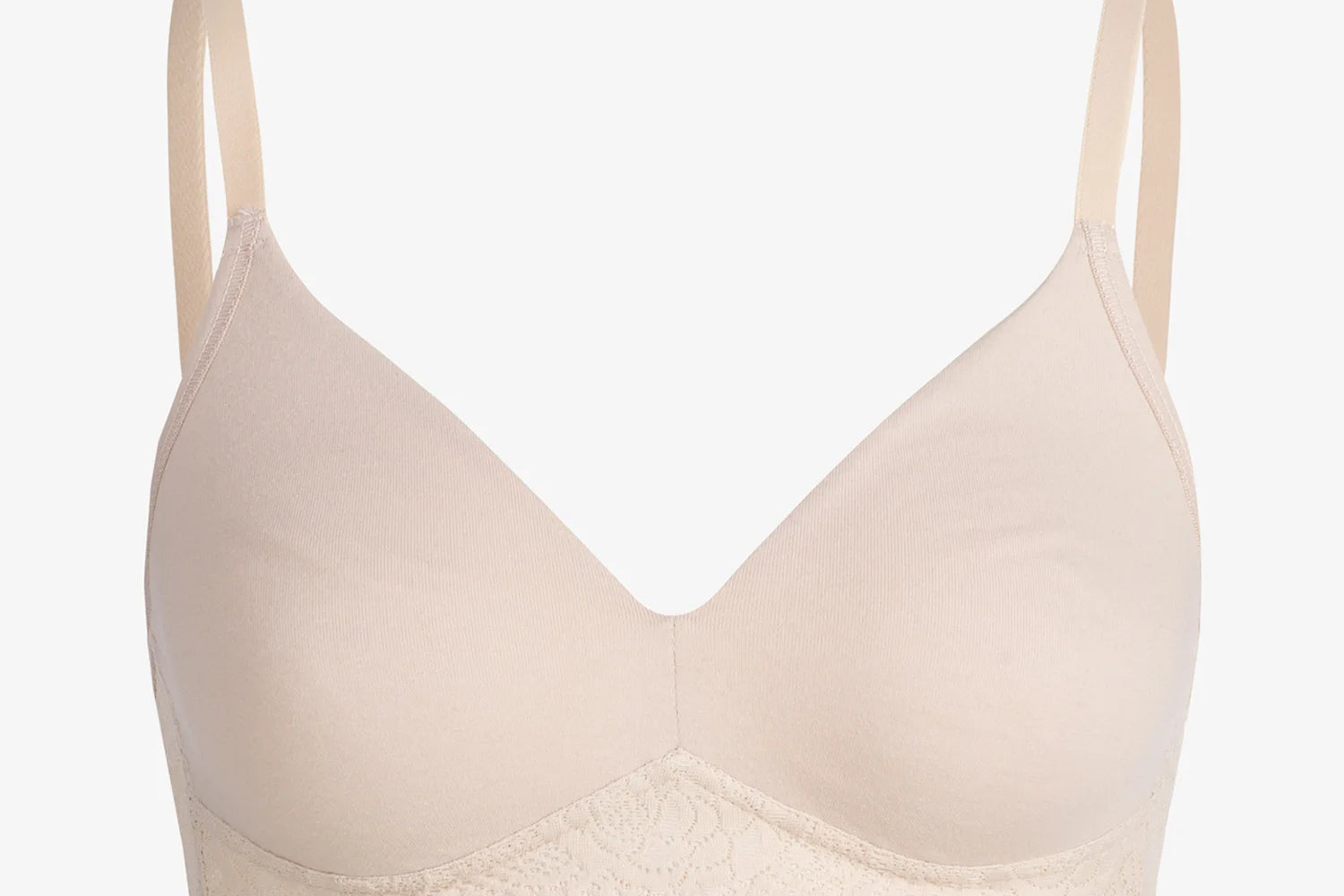
Our new Sleek Lace collection shows both systems within one series: the Moulded bra and the Balconette bra come in cup sizes, the Plunge bra in dress sizes 34 to 44, the bottoms in 34 to 46.
That also answers a common search question: strictly speaking there is no such thing as cup size M. M is a dress size and covers several cup sizes depending on the model. If you know your cup size and want to buy a model sold in S to XL, go by the size chart of that specific product rather than the letter on your bra.
Which cup sizes does erlich textil offer?
Our scale runs from A to G. The focus is on A to E, larger cups are not consistently available. Depending on the model, our cup sized bras run from 70A to 85E or from 75A to 95E.
The Sleek Lace collection is the newest addition. It is wire free and still cut in cup sizes:
- Moulded bra: 75C to 85E
- Balconette bra: 75B to 85E
- Plunge bra: dress sizes 34 to 44
That combination is unusual, because many women automatically associate cup sizes with underwire. With Sleek Lace the support comes from the cut and a supportive mesh lining instead, while the lace stays controlled in its stretch. If you want to know how lace works as a fabric in the first place, we wrote it up in What is lace.
For an overview of all models and their size charts, have a look at our bras and bralettes. The exact size range is always shown on the product page, because it differs from model to model.
When the cup does not fit
Whether the cup size is right is easier to see in the mirror than in a chart.
The cup is too big if the fabric wrinkles, the upper edge stands away or your breast does not fill the cup.
The cup is too small if your breast spills over at the top or the side, the edge rests on your breast instead of your ribcage, or you can see it marking your skin.
One thing matters here: band and cup cannot be judged separately. If the band sits too loosely, the bra rides up and the cup automatically sits wrong, even when the letter was chosen correctly. So before you move a cup size up or down, check the band first. And if your size is currently unavailable, a sister size will often help.
Frequently asked questions
What does cup size C mean?
Cup size C means your bust measurement is roughly 16 to 18 centimetres larger than your underbust measurement. The letter describes that difference, not the absolute size of your breasts. This is why a 70C holds less volume than a 90C even though both are called C.
Is cup size 75B big?
Neither big nor small, because the letter only describes a ratio. 75B means an underbust of around 73 to 77 centimetres and a bust roughly 14 to 16 centimetres above that. Whether that is a lot or a little depends entirely on your build, and it says nothing about whether the bra fits well.
Which cup size is M?
No particular one. M is a dress size and covers several cup sizes depending on the model. Bralettes and soft bras often come in S to XL because they have more give without a rigid cup. In that case go by the size chart of the product rather than the letter on your underwire bra.
What is the largest cup size?
The scale is open ended and common European charts run to H and beyond. At erlich textil the scale runs from A to G, with the focus on A to E. Which sizes are currently in stock is shown on each product page.
How do I measure my cup size correctly?
Standing up, measure your underbust directly under the bust and your bust at its fullest point, both times horizontally. Subtract the underbust from the bust, and the difference gives you the letter. Measure without a thick jumper and without a heavily padded bra, otherwise the bust measurement comes out too large.
What do I do if the cup is too big?
Check the band first. If it sits too loosely, the bra rides up and the cup wrinkles even though the cup size is correct. If the band sits firmly and the cup still gapes, go one cup size down. Alternatively try a sister size with a tighter band and a larger cup.
How many cm is 75B?
75B means an underbust between 73 and 77 centimetres and a bust of around 90 centimetres, so a difference of roughly 15 centimetres. These are guide values: depending on the manufacturer they vary by one to two centimetres.
How do I measure my underbust correctly?
Place the tape directly under your bust, horizontally around your body, snug but not constricting. Measure standing up and ideally without a bra. Round the result to the nearest band size, so 76 measured becomes band size 75. The most common measuring error is a tape that slips at the back.