

Is Washing Really Necessary?
Minimalism applies to laundry too: sometimes less is more. Washing uses energy, and detergent ends up in the treatment plant. So ask yourself before the next load: does your favourite piece really need washing? A few simple tricks save electricity, water and money.
Stains
Small stains can often be removed by hand from the fabric and you're good to go. With a little dish soap and water, you'll get most stains out quickly.
Freshness Without Washing
Your clothes pick up light odors from wearing them? Or they've been in a suitcase for a while? Hang the clothes on a hanger or clothesline outside overnight. Fresh air and nighttime humidity will help your clothes smell fresh again and may even prevent wrinkles.
How do I wash properly, and with less electricity?
Temperature
Lowering the washing temperature is expressly allowed! According to the German Environment Agency (Umweltbundesamt), washing at 30 °C instead of 60 °C uses significantly less electricity. Before washing, check the care label. It always states the maximum washing temperature, so you can choose a lower one with a clear conscience. Thanks to modern washing machines and detergents, lower temperatures are often enough. Your clothes will thank you too if they are not exposed to excessive heat.
Many machines also have an eco wash programme. It runs longer, but uses less water and less energy for heating. In other words: getting laundry just as clean with cooler water and less of it takes more time.
Detergent
Broadly speaking, there are heavy-duty, colour and delicate detergents. As a general rule: solid rather than liquid. The German Environment Agency (Umweltbundesamt) recommends powder detergents because they need no preservatives and can be dosed more sparingly. There are also detergents on the market that do without petroleum-based surfactants, fragrances and preservatives.
Heavy-duty detergents contain bleach and are therefore popular for whites. A heavy-duty detergent is also suitable for heavily soiled laundry and for bed linen and towels that can be washed at 60 °C.
Colour detergents are well suited to coloured (and black) textiles. They contain no optical brighteners.
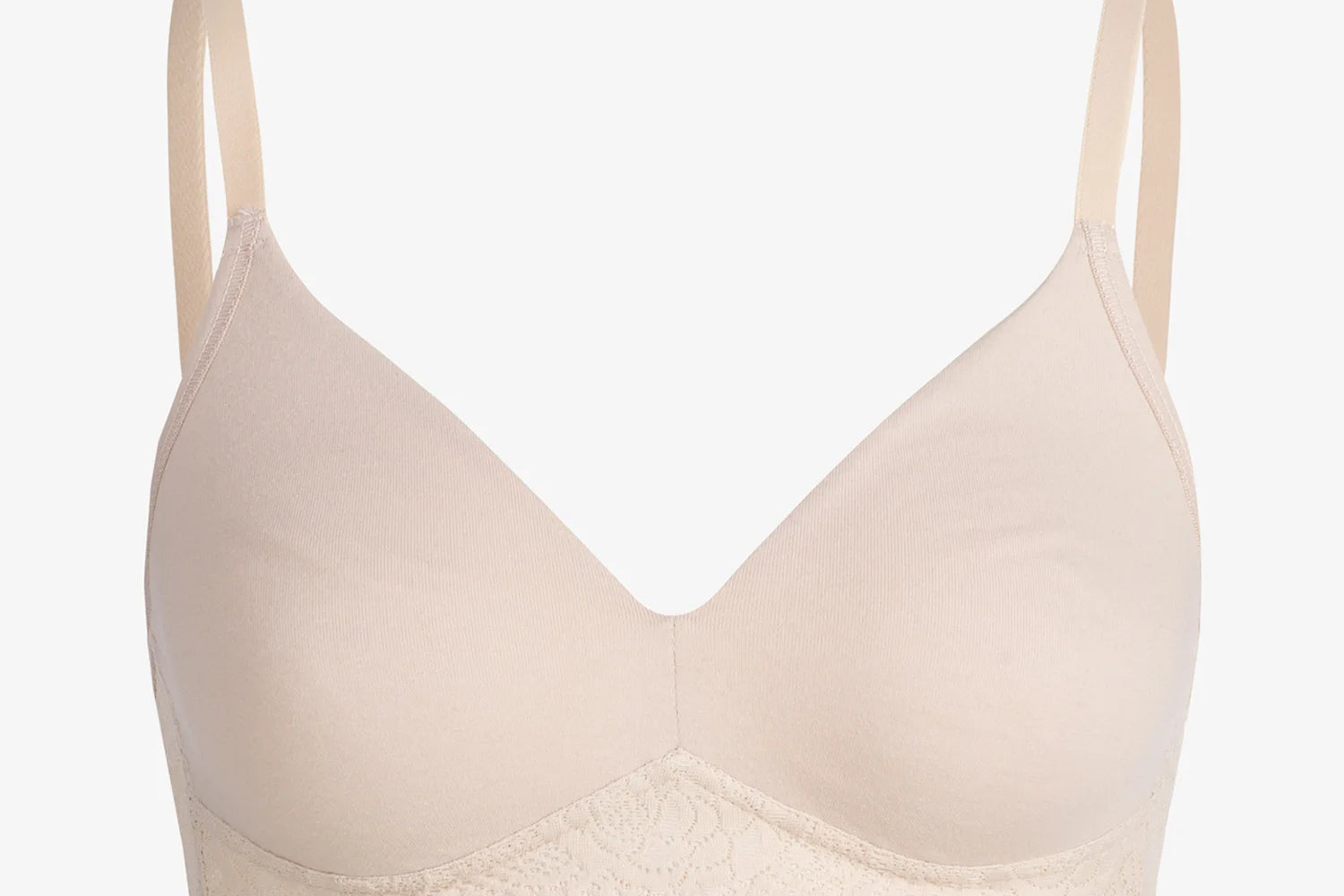
For our lace and modal products, a delicate detergent is the right choice. It contains no bleach or brighteners and cleans delicate materials gently. Combined with a delicate cycle at low temperatures (20 to 40 °C), nothing can go wrong.
Are There Any Helpful Tools I Can Use?
Laundry Bags
For delicate materials, bras and underwear (especially with lace) we recommend always using a laundry bag. It protects your textiles from unnecessary friction in the drum.
GUPPYFRIEND
The GUPPYFRIEND washing bag tackles the microfibre problem. With every wash, microfibres, i.e. tiny fragments of synthetic fibre, come loose from clothing and end up in the waste water. Synthetic materials such as acrylic, nylon and polyester are mainly affected.
How it works: put your items in the bag, fill it up to halfway and wash as usual. The manufacturer states that the soft surface of the bag means clothing loses fewer fibres, and that broken fibres are caught in the seam of the bag. You can remove the residue and dispose of it with household waste. According to the manufacturer, the GUPPYFRIEND is made from untreated and undyed polyamide 6.6. For more information and a detailed FAQ, take a look here.
Reuse Instead of Disposal
We refurbish intact returns and put them back on sale. Where that isn't possible, we sell the B-grade stock at sample sales and pass it on regularly to the Unperfektshop "Mit Ecken und Kanten". Whatever is then left over we donate to charitable organisations: in 2024 we were able to support Kölner Obdachlosenhilfe with over 600 products. The aim of these stages is to have to dispose of as little stock as possible.
And What Comes After Washing?

Drying
The good old washing line is the first choice for drying your favourite pieces. It uses no electricity and is gentle on your clothes. Before the items go on the line, it is best to shake them out once or twice, which usually saves you having to iron them afterwards.
When drying, make sure you dry particularly heavy items, such as our Horst or Milla, flat. Hung on a hanger or the washing line, the fabric could stretch under its own weight and lose its shape.
Tip: if you hang your clothes on the line, they dry best in the wind and not, as you might think, in strong sunshine. So: always make sure there is a good airflow. The wind also helps smooth out creases. Sun bleaches white cotton textiles naturally; protect colour-sensitive garments from too much sun or turn them inside out.

Ironing
With a little routine, ironing can be avoided in most cases: shake the laundry out straight after the wash and hang it on the line with pegs along the seam, or on a hanger; place it outside if you can and make sure there is a good draught (that smooths the first creases while it dries), then once dry, smooth it flat and fold. Done!
All the same, reaching for the iron is sometimes unavoidable. If so, check the care symbols and don't iron too hot. It's easier if you spray the garment with a little distilled water first.
Exact care details for each product are on the care labels sewn into every erlich textil product.
Want to know all the details and learn more about individual materials and how to care for them? Find out more here: