

Linen is a natural fibre obtained from the flax plant. It is cooling, breathable and absorbs a lot of moisture without feeling clammy. That is exactly what makes linen one of the most popular fabrics for bedding and home textiles. In this guide we explain what linen is, how it is made, what properties it has and how to care for it correctly.
What Is Linen and How Is It Made?
In short: linen is a natural fibre made from the stem of the flax plant. Spinning and weaving turn the raw fibre into the finished fabric we know as linen.
Linen is one of the oldest cultivated fibres in the world. It is obtained from the stems of the flax plant, which is why it is also called flax fibre. The fibres are naturally long and fine, which gives the finished fabric its characteristically smooth, slightly irregular surface.
Our linen is European linen, processed in Portugal. From flax to finished fabric, the fibre goes through several traditional steps: after harvesting, the flax is retted, meaning moisture and natural microorganisms loosen the fibres from the woody stem. The stem is then broken and scutched to separate the woody parts from the fibre. During hackling, the fibres are combed straight and sorted by length before being spun into yarn and finally woven into linen fabric. Compared with many other fibres, flax needs little additional irrigation to grow.
The Properties of Linen
Linen is known above all for its cooling, breathable feel. According to material science, the fibre absorbs up to around 35% air humidity and releases it quickly back into the surrounding air. As a result, linen feels pleasantly dry even on warm nights.
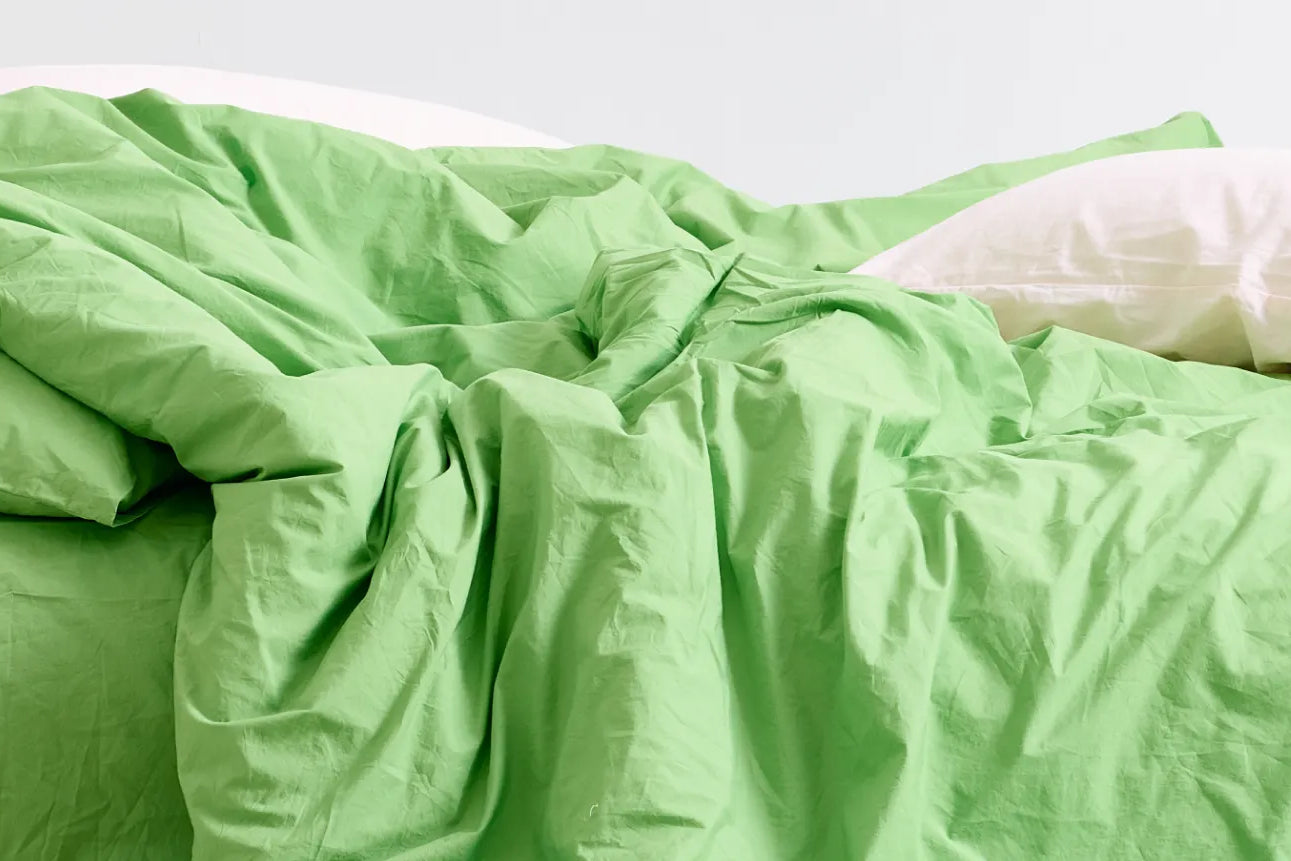
On top of that, linen is hard-wearing and long-lasting. It survives many washes and keeps its shape. The flax fibre is also known for its high tensile strength, one of the strongest natural fibres there is, and it even gets a little stronger when wet. Linen barely holds odours and stays fresh longer. What you should know: linen has little elasticity and therefore creases visibly. For many, this natural, slightly crumpled look is exactly the charm of the material.
- cooling and breathable, absorbs plenty of moisture
- long-lasting and hard-wearing, shape-retaining over many washes
- tear-resistant, one of the strongest natural fibres, even stronger when wet
- odour-resistant, stays fresh longer
- creases visibly and has little elasticity
Benefits and Drawbacks at a Glance
Benefits
Linen regulates temperature and moisture particularly well, which makes it an ideal material for bedding. It is long-lasting, feels softer with every wash and gets better over the years. If you want a cool, breathable sleeping climate, linen is the right choice.
Drawbacks
Linen creases, that is part of the material. It also has little stretch and reacts more sensitively to strong friction than cotton, which is why a gentle wash cycle makes sense. Fresh linen can also feel a bit stiffer and firmer at first. This effect noticeably fades after the first few washes. If you prefer a smooth, crease-free look, linen may not be the right material for you.
How to Care for Linen
Linen is easier to care for than many think. Wash it cool, usually 30-40 °C is enough, ideally on a gentle cycle with a delicates detergent. Skip the tumble dryer and let linen air-dry instead, which protects the fibre and prevents excessive shrinking.
If you do not like the crumpled look, you can iron linen while slightly damp. Always check the care label of the specific item before washing, as fabric blends may carry different instructions.
Linen at erlich
With us you will find linen mainly in the home range. Our linen bedding is made from European linen, processed in Portugal. Further home textiles round off the range. You can find more on material and origin on our linen material page.
If you want to read into the topic more broadly, our posts on sustainable bedding and on bedding care will help.
Frequently Asked Questions
What Kind of Fabric Is Linen?
Linen is a woven fabric made from flax fibres, a plant-based natural fibre obtained from the stem of the flax plant. Typical for the fabric are a cooling, breathable feel, high tear resistance and a natural, slightly irregular texture. Linen is a purely plant-based fabric, not a synthetic one.
Is linen sustainable?
Flax, the raw material for linen, grows in Europe and needs little additional irrigation to grow. On top of that, linen is very long-lasting, which extends how long you use it. Whether that is sustainable enough for you depends on your own criteria.
Why does linen crease?
Linen is naturally low in elasticity. The fibres barely give under pressure and do not spring back into their original shape, so creases form. This is not a defect, but a property of the material.
How do you wash linen?
Wash linen cool at 30-40 °C on a gentle cycle with a delicates detergent. Let it air-dry instead of using the tumble dryer. That keeps the fibre looking good for a long time. Check the care label when in doubt.
Is linen or cotton better for bedding?
Both work well. Linen cools more strongly and regulates moisture particularly well, but creases visibly. Cotton is softer from the start and smoother. Which bedding suits you better depends on whether you prefer a cool or a soft sleeping feel.
Does linen scratch on the skin?
New linen can feel a little firmer at first. With every wash it becomes softer and more supple. After a short time, good linen feels pleasantly soft.
Sources
- Flax fibre: how linen fibre is obtained and its properties